Does a passing jet keep interrupting your conversations at home in Burbank? If you live near Hollywood Burbank Airport’s flight paths, you’re not imagining it. The good news is you can check where flights actually go, reduce indoor noise in practical ways, and make smart decisions as a buyer or seller. In this guide, you’ll learn how to track flight activity, what really works to quiet a home, what local programs offer, and the steps to take in a Burbank transaction. Let’s dive in.
Know Burbank’s flight paths
Hollywood Burbank Airport (BUR) hosts a noise hub with WebTrak flight tracking, a 24‑hour hotline, and details on the Residential Acoustical Treatment Program (RATP). Start on the airport’s Noise Issues page to view recent flight paths, submit noise inquiries, and find program contacts. You can also call the 24‑hour hotline at 1‑800‑441‑0409 for noise concerns.
For policy updates and procedure changes, check the FAA’s BUR community engagement page. In August 2025 the FAA issued a Record of Decision selecting the No‑Action alternative for proposed departure amendments, which means the agency did not adopt the proposed alternatives at that time. Nighttime use policies also limit certain “noisy” aircraft between 10 p.m. and 7 a.m., with exceptions for emergencies and delays.
- Visit the airport’s Noise Issues page: WebTrak, hotline, and RATP details
- Follow federal updates: FAA BUR community engagement page
Noise basics you can use
Airports use 24‑hour averages like CNEL or DNL to map noise exposure. Homes inside the 65 CNEL contour are typically the focus for airport insulation programs. Sound Transmission Class (STC) and Outdoor‑Indoor Transmission Class (OITC) describe how well windows, doors, and walls block sound. Older single‑pane windows often sit in the low‑20s STC, while quality retrofit systems can reach the mid‑30s or higher. Decibels are logarithmic. A 10 dB drop is commonly perceived as about half as loud. Combine upgrades to stack benefits. For background on how sound is measured, see the FHWA noise measurement handbook.
What actually quiets a home
Windows and doors first
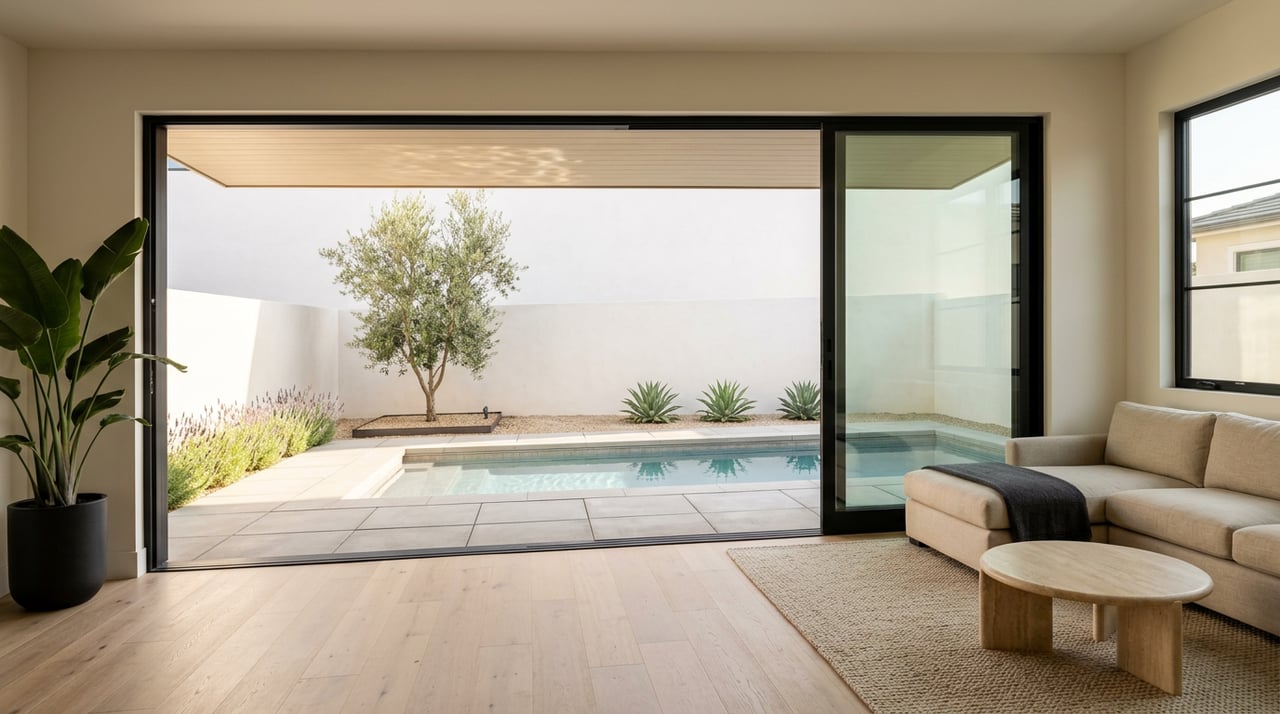
- Upgrade to acoustically rated windows or add secondary glazing. These are usually the single biggest improvement. Many solid installations deliver roughly 25–35 dB of interior reduction under typical conditions.
- Seal it tight. High‑quality weather‑stripping and airtight installation matter as much as the glass.
For practical guidance on exterior soundproofing that works, review this JLC field guide.
Attic, walls, and air‑sealing
- Seal and insulate the attic to reduce flanking paths and improve comfort.
- Add mass and cavity insulation in walls where needed. These steps complement window work and round out the envelope.
HVAC and ventilation
- Quiet upgrades only help if you can keep windows closed comfortably. Proper HVAC or mechanical ventilation lets you maintain fresh air and temperature without opening windows. Airport programs often include AC or ventilation so you can stay comfortable with windows shut.
Interior strategies and quick fixes
- Use heavy curtains, window plugs, soft furnishings, and place bedrooms on the quiet side of the home.
- For sleep, white‑noise machines or fans can mask intermittent overflights. These do not reduce actual sound levels but can improve comfort. For costs and DIY window inserts, see this practical overview.
Exterior barriers and vegetation
- Trees and small fences do little against overhead aircraft. Barriers help most with ground sources like roads. For aircraft, prioritize the building envelope. For context on barrier effectiveness, review this National Academies resource.
Costs and ROI signals
- Window inserts or secondary glazing often range from a few hundred to low‑thousands per opening.
- Professionally installed acoustical replacement windows can run several hundred to a few thousand per opening, depending on size and specs.
- Whole‑home airport insulation projects frequently include windows, doors, attic work, and HVAC, with program averages that can reach tens of thousands per home. Local costs vary.
Programs and eligibility in Burbank
Hollywood Burbank Airport runs the Residential Acoustical Treatment Program guided by its Part 150 study and the 65 CNEL contour. Eligible homes may receive windows, doors, attic insulation, and ventilation at no direct cost, typically in exchange for an aviation easement as required by program rules. Funding cycles can vary, so check current status and application steps on the airport’s Noise Issues page.
How to report noise and track flights
- Use WebTrak to view recent flight tracks at the times that matter to you.
- Submit noise inquiries online and note dates, times, and locations.
- Call the 24‑hour hotline at 1‑800‑441‑0409.
- Watch the FAA BUR page for any procedure proposals, maps, and comment opportunities.
Buyers: How to evaluate a flight‑path home
- Check WebTrak for typical flight tracks during mornings, evenings, and weekends.
- Ask for documentation of any RATP or Part 150 treatments, including window specs and HVAC additions.
- Visit at representative times, not just midday on a weekday. Note bedroom orientation and window quality.
- Include noise in inspections. At minimum, check seals, attic insulation, and ventilation.
- Review seller disclosures, including any “airport influence” statements.
Sellers: How to list with confidence
- Gather records of sound‑insulation work, including specs and any STC or OITC documentation.
- Be transparent. California expects material facts about airport influence to be disclosed in standard forms. For a plain‑language explainer, see this overview of disclosures in real property transactions.
- Highlight quiet features in your marketing: insulated windows, airtight doors, upgraded HVAC, and bedrooms on the quiet side.
Market impacts and pricing
Academic studies find a measurable impact from aircraft noise on home values, often expressed as a percent per dB. A widely cited meta‑analysis reports average discounts of roughly 0.4 to 1.1 percent per dB, with U.S. studies near 0.5 to 0.6 percent on average. Local effects vary by exact location, prior insulation, and buyer tolerance. For context, review the Nelson meta‑analysis.
Quick homeowner checklist
- Confirm typical flight activity with WebTrak at key times.
- Prioritize airtight, acoustically rated windows or secondary glazing.
- Seal and insulate the attic, review wall assemblies, and add proper HVAC or ventilation.
- Document upgrades and keep warranties and specs.
- If eligible, apply to the airport’s RATP and track funding windows.
If you are thinking about buying or selling under Burbank’s flight paths, you deserve clear guidance and a plan that fits your needs. For a calm, data‑driven approach and a tailored strategy, connect with Kate Nalbandova for local advice.
FAQs
Will upgraded windows quiet aircraft noise in Burbank homes?
- Yes, acoustical windows or secondary glazing with airtight installation are usually the biggest single improvement, often yielding roughly 25–35 dB of interior reduction under many conditions.
How do I check if my Burbank home qualifies for the airport’s RATP?
- Start on the airport’s Noise Issues page to review eligibility guidance tied to the Part 150 65 CNEL contour and to contact program staff for current status.
Do trees or backyard fences help with airplane noise overhead?
- Not much; for overhead sources like aircraft, exterior barriers and vegetation provide limited benefit compared with upgrading the building envelope.
Have BUR flight paths changed recently, and could they change again?
- The FAA’s August 2025 decision selected the No‑Action alternative for proposed departure changes, but future procedural updates are possible; monitor the FAA BUR page for updates and public materials.
What should Burbank buyers ask about noise during escrow?
- Request any RATP or insulation records, review TDS and NHD disclosures for airport influence, inspect windows, doors, attic insulation, and confirm you can maintain comfort with windows closed.